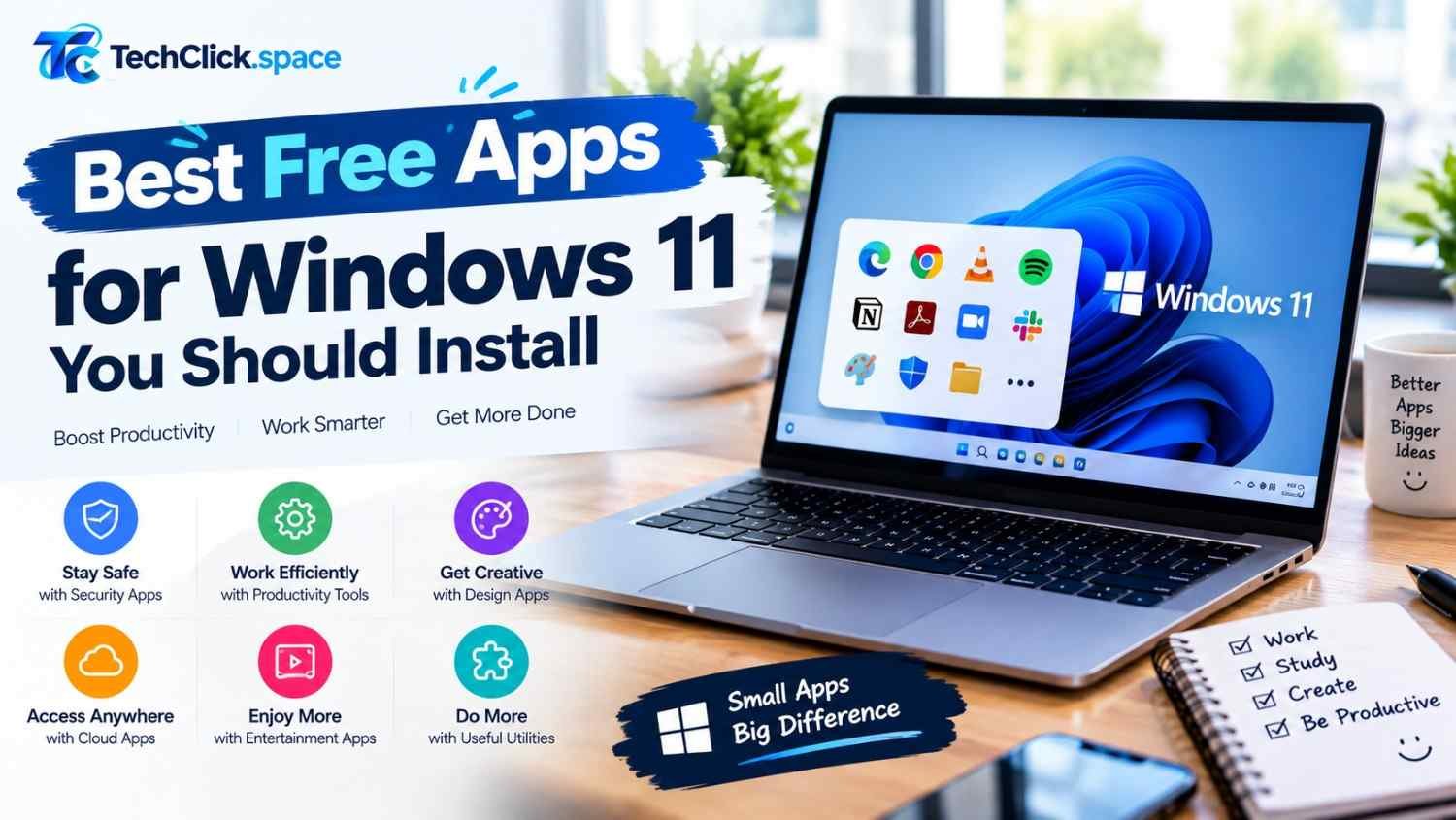
Windows 11 ships with a solid foundation of built-in tools, but the operating system’s true potential remains locked behind a collection of third-party utilities that Microsoft either forgot to build or chose not to include. Whether you are frustrated by the sluggish default search, tired of losing clipboard history, or simply want more control over your window layouts, there is a free app designed to solve your specific pain point.
The challenge lies in separating genuine productivity boosters from bloatware. Many “free” tools come bundled with ads, telemetry, or aggressive upsells. This guide cuts through the noise and presents only the best free apps for Windows 11 that respect your system resources, prioritize privacy, and deliver measurable improvements to your daily workflow.
From Microsoft’s own PowerToys to lesser-known open-source gems, these are the applications worth installing on a fresh Windows 11 setup in 2026.
Microsoft PowerToys: The Essential System Enhancement Suite
If you install only one app from this list, make it PowerToys. Developed by Microsoft itself, this open-source utility suite addresses dozens of small frustrations that Windows 11 inexplicably leaves unaddressed. It includes over 30 individual tools, most of which can be enabled or disabled based on your needs.
FancyZones is the headline feature for anyone who works with multiple windows. It replaces Windows’ basic snap functionality with fully customizable grid layouts, allowing you to define exactly where applications should land when dragged. You can create separate layouts for different monitors and switch between them instantly.
Text Extractor performs OCR on any visible screen content with a simple keyboard shortcut. Whether you are pulling text from a video, a PDF, or an application that blocks copying, this tool captures it instantly.
Always On Top pins any window above all others, which is invaluable when referencing data while writing or cross-checking information between applications.
Other notable utilities include Awake for preventing sleep during long downloads, Command Palette for a Spotlight-style launcher, and Find My Mouse for locating your cursor on large displays.
Everything: Instant File Search That Actually Works
Windows 11’s built-in search is functional at best and frustrating at worst. It frequently prioritizes web results over local files and can take seconds to return queries that should be instantaneous. Everything by Voidtools solves this problem completely.
The application indexes the NTFS Master File Table directly rather than crawling file contents, which means searches return results in milliseconds even on drives containing hundreds of thousands of files. Type a few characters, and matching files appear instantly.
Everything consumes minimal system resources despite its power. Once configured as a startup application, it becomes a permanent fixture of your workflow. The time saved from avoiding Windows Search’s sluggish performance compounds significantly over weeks and months.
Ditto: Clipboard History That Goes Beyond the Basics
Windows 11 includes a basic clipboard history accessible via Win + V, but it stores only the last 25 items and offers limited management options. Ditto takes clipboard functionality to a professional level.
This open-source clipboard manager permanently stores everything you copy—text, images, HTML, and custom formatting—in a searchable database. You can retrieve any item from days or weeks ago, organize frequently used snippets into groups, and even sync clipboard content across multiple computers on your network.
For anyone who regularly copies and pastes between documents, writes code, or manages multiple projects, Ditto eliminates the repetitive frustration of losing clipboard content when you copy something new. It is one of those tools that quietly becomes indispensable within a day of use.
Snipaste: Screenshot and Annotation Perfection
Snipaste reimagines what a screenshot tool can do. While Windows 11’s Snipping Tool has improved considerably, Snipaste offers a workflow that many users find superior.
The core innovation is the ability to “pin” screenshots to your screen as floating reference images. Need to compare data from two documents? Pin the first, then work in the second. Following a tutorial? Pin the instructions directly on top of your workspace.
Beyond pinning, Snipaste includes comprehensive annotation tools—arrows, text, shapes, blur, and highlight—along with OCR capabilities for extracting text from captured images. The entire workflow, from capture to annotation to pinning, flows seamlessly without requiring separate applications.
Flow Launcher: A Faster Way to Navigate Windows
Flow Launcher replaces the Start menu and Windows Search with a keyboard-driven command palette that responds instantly. Press a hotkey, type a few letters, and Flow Launcher finds applications, files, folders, or performs calculations and web searches.
What elevates Flow Launcher beyond basic launchers is its plugin ecosystem. You can search Spotify, check currency conversions, run shell commands, or access clipboard history—all from the same interface. Paired with Everything for file indexing, Flow Launcher essentially eliminates the need to touch your mouse for navigation tasks.
For keyboard-centric users, this represents a fundamental shift in how you interact with Windows. The speed difference compared to navigating through Start menu tiles or waiting for Windows Search to respond is immediately noticeable.
Notepad++: A Text Editor That Respects Your Time
Windows Notepad has received updates in recent versions, but it remains a basic tool that struggles with anything beyond plain text. Notepad++ fills this gap with a lightweight, feature-rich editor that launches quickly and handles virtually any text-based task.
The application supports syntax highlighting for over 80 programming languages, making it suitable for editing configuration files, scripts, and code snippets. Its find-and-replace functionality supports regular expressions, which is essential when working with large text files or structured data.
Notepad++ also maintains its own clipboard history for text content and supports a plugin ecosystem that adds features like spellcheck, FTP integration, and code execution. For anyone who regularly works with text files beyond simple notes, it is a substantial upgrade over the default option.
KeePassXC or Bitwarden: Secure Password Management
Windows 11 still lacks a dedicated password manager. The built-in Credential Manager is rudimentary and unsuitable for serious use. Two free options fill this void effectively.
KeePassXC stores passwords in an encrypted local database with no cloud dependency. It is ideal for users who prioritize complete control over their credentials and do not want sensitive data leaving their machine. A browser extension handles autofill securely.
Bitwarden offers a more modern experience with cross-device synchronization, a polished browser extension, and a generous free tier. It provides everything most users need from a paid password manager without the subscription requirement.
Either choice represents a massive security improvement over reusing passwords or storing them insecurely. The decision comes down to whether you prefer local-only storage or convenient synchronization.
UniGetUI: Software Management Without the Hassle
Keeping applications updated across multiple sources is tedious. UniGetUI (formerly WingetUI) provides a graphical interface for Windows Package Manager (winget), Scoop, Chocolatey, and other package managers, consolidating software installation and updates into a single dashboard.
The application scans your system for installed programs and checks for available updates, regardless of how they were originally installed. You can update everything with a single click, install new software from multiple repositories, and uninstall applications cleanly—all without touching command-line tools.
For users who regularly set up new machines or want to maintain a consistent software environment, UniGetUI transforms a tedious multi-step process into a streamlined workflow.
LocalSend: Cross-Device File Transfer Without the Cloud
LocalSend provides a simple, secure way to transfer files between devices on the same network without relying on cloud services or messaging apps. It works across Windows, macOS, Linux, Android, and iOS.
The application requires no account, no internet connection, and no size limits. Files transfer directly between devices over your local network, which means faster speeds and complete privacy. For anyone who regularly moves files between a phone and PC, or between multiple computers, LocalSend eliminates the friction of emailing files to yourself or uploading to cloud storage.
Double Commander: File Management for Power Users
Windows File Explorer works for basic tasks, but power users often need more. Double Commander is a two-panel file manager inspired by Total Commander that makes file operations significantly faster.
The side-by-side panel layout lets you view source and destination folders simultaneously, eliminating the need to open multiple windows when moving or copying files. You can rename thousands of files at once using masks and regular expressions, perform full-text searches inside documents, and handle archives like ZIP and RAR files as though they were regular folders.
The interface is not as polished as File Explorer, but the productivity gains for anyone who regularly organizes large numbers of files are substantial.
Conclusion
The best free apps for Windows 11 share common characteristics: they solve specific problems, respect system resources, and stay out of your way once configured. Microsoft PowerToys alone addresses more than a dozen frustrations with the default Windows experience. Everything transforms file search from a chore into an instant operation. Ditto and Snipaste eliminate repetitive clipboard and screenshot tasks.
The key is to start with the tools that address your most frequent pain points, then expand as you become comfortable with a more optimized workflow. None of these applications require payment, subscriptions, or compromises on privacy. They exist because dedicated developers identified problems worth solving and chose to share their solutions freely.
Install a few, use them for a week, and you will wonder how you managed without them.